



Hurt at Your Miami Apartment Building? What to Do After a Fall
You were carrying groceries upstairs, walking to your car, or taking the trash out. Then a loose step or wet walkway changed your whole day. Now you may be dealing with pain, missed work, and a landlord who says the fall was your fault.
A fall at a Miami apartment building may lead to an injury claim when someone responsible for the property was negligent and that negligence caused your injuries. Falling on the property alone does not prove that. Where you fell, what caused it, and who controlled the area all matter. Our Miami slip and fall team can review those questions with you.
Who may be responsible for an apartment fall?
Start with the location. A shared stairway, parking area, or walkway raises different questions from a problem inside your own apartment. The owner, property manager, maintenance company, or another party may have a role, depending on their duties and what happened. A condo association may also be involved in a condominium’s common areas.
Florida’s landlord-maintenance law addresses applicable building, housing, and health codes and certain repair and maintenance duties. The rules have qualifications; responsibility cannot be decided just by looking at a photo or saying that someone owns the building.
Broken steps, loose handrails, poor lighting, damaged walkways, and recurring leaks are examples worth investigating. They are possible hazards, not automatic proof of a valid case. The evidence needs to connect the unsafe condition, the responsible party’s conduct, and your injury.
What should you do after a fall at your apartment?
- Get medical help. Tell the provider how the fall happened and describe your symptoms accurately. If you need emergency help, call 911. Do not put off needed care while trying to build a claim.
- Report what happened. Notify the landlord or property manager with the date, location, and a factual description. Keep a copy of your email, message, or report. Avoid guessing about facts you do not know.
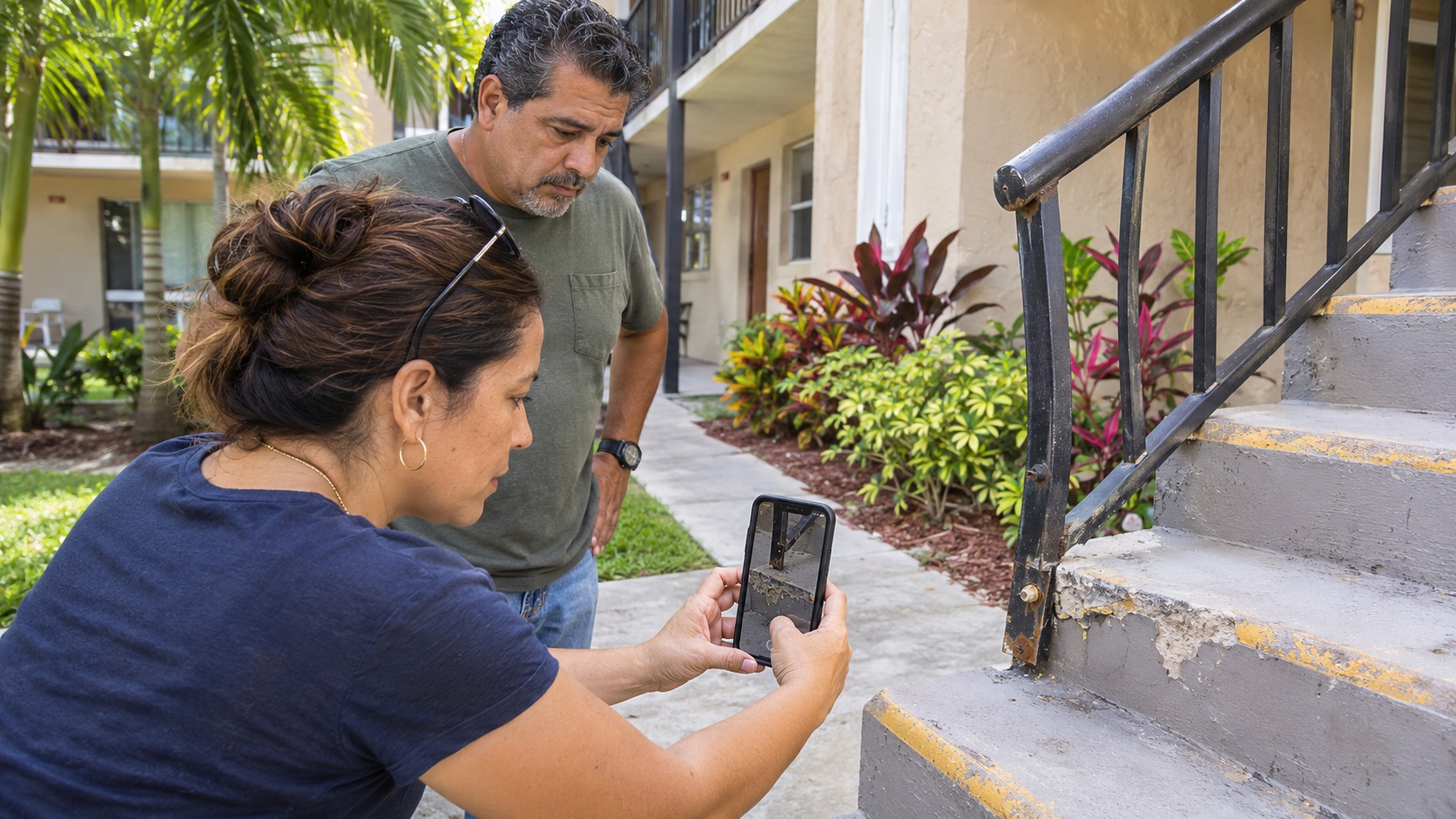
- Document the area safely. Photograph the condition, surrounding walkway, lighting, and any warning signs. You do not need to return to an unsafe stairway to get a better picture.
- Save the records you already have. Maintenance requests, text messages, the lease, witness contact details, medical records, and missed-work records may help explain the situation.
- Ask about preserving video and repair records promptly. Do not assume a camera captured the fall or that recordings will be kept indefinitely. An attorney can discuss appropriate preservation requests.
Our fall-evidence guide explains what photos, witnesses, video, and records may help establish. Missing one item does not decide the entire case.
Does the landlord have to know about the problem?
Notice can be important, but the legal test depends on the location, condition, and applicable duty. A defect inside a rented home is not always treated the same way as a shared staircase. A spill in a business also has its own rules; those rules should not simply be copied onto every apartment fall.
Earlier repair requests, complaints, inspections, or evidence of a recurring problem may help. If you never complained before the fall, say so. Do not create a complaint after the fact and present it as an earlier one. An attorney can review what notice or other evidence is relevant to your situation.
What if the property manager blames you?
Wearing sandals, carrying bags, or looking away does not settle the question by itself. The condition of the property and everyone’s conduct need to be considered. In negligence actions governed by Florida’s modified comparative-fault rule, a person’s share of fault can reduce compensation; being found more than 50% responsible for their own harm generally prevents recovery. The applicable rule and facts need review.
Can a claim include missed pay and medical bills?
Depending on the evidence and law, an injury claim may involve reasonable medical expenses, lost income, and other losses. Keep appointment records, receipts, work schedules, and information about restrictions on your activities. There is no standard payment for an apartment fall, and an injury does not guarantee that someone else must pay.
Questions people ask after an apartment fall
Can I ask for help if I am a visitor rather than a tenant?
Yes, you can ask an attorney to review the circumstances. Your reason for being there, the area involved, and the property duties may affect the analysis. Being a visitor does not automatically establish or rule out a claim.
Do I need a witness or a video?
Those can help, but other evidence may matter too. Photos, maintenance records, medical documentation, and a consistent factual account may help explain what happened. An attorney can assess the evidence that is actually available.
How long can I wait?
Florida generally allows two years for negligence claims accruing after March 24, 2023, but the correct deadline depends on the claim and any exceptions. Review Florida’s limitations statute with an attorney promptly. Evidence may disappear long before the filing deadline.
Talk through what happened with our Miami team
You do not need to have every document before calling. Mario Serralta & Associates helps injury clients throughout Miami-Dade from its Miami Lakes office, with consultations in English and Spanish. Request a free consultation, or learn about our broader Miami personal injury services.
General information, not advice about a particular case. The image is a fictional illustration, not an actual client, property, or case.